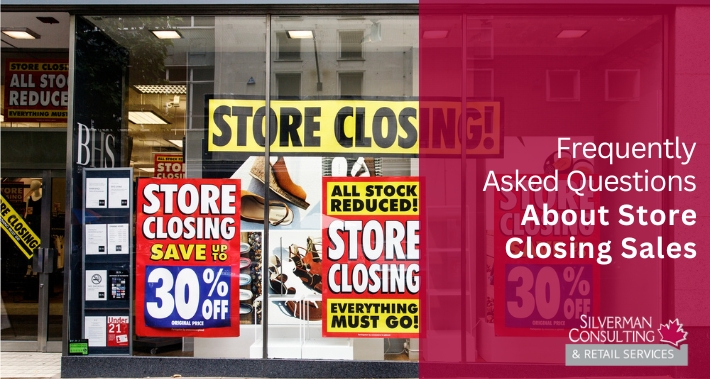
There’s plenty of information to help if you’re opening a store or new business for the first time.
But what happens when it’s time to close down your business?
One thing you can do is seek out professional advice from a retail liquidation sale management firm.
At Silverman Consulting And Retail Services, we’re here to guide our clients through this very process.
But what information do you need to know when you’ve made the decision to close your business?
How should you go about putting on a store closing sale event?
And what steps do you need to take to ensure its success?
At Silverman Consulting And Retail Services we’re dedicated to providing useful information to business owners just like you.
In today’s retail consultant article, we’re here to answer some of your most frequently asked questions about store closing sales.
What Is A Store Closing Sale?
A store closing sale is an in store event store owners run when they decide to close their store.
It’s dedicated to liquidating as much of your stock as possible, and creating a significant amount of revenue at the same time.
It’s also sometimes referred to as a close out sale, retirement sale, or clearance sale.
Regardless of its name, a store closing sale generally signifies a permanent business shut down or at minimum is shutting down at the current location.
So this doesn’t necessarily mean that everyone who puts on a store closing sale is completely letting go of their business.
For instance, some stores put on a closing sale before moving to another location.
We call this a store relocation sale.
RELATED: What To Consider When Picking A Retail Store Location
Other reasons to put on a store closing sale include poor product sales, changing economic conditions, retiring from retail, or wanting to switch careers and start something new.
When you put on a store closing sale, you’re indicating to your customers that everything must go.
If done right, a store closing sale is a great way to shut down your retail store with a bang.
When Is The Best Time To Have A Store Closing Sale?
Every store is different.
What works for one store might not work for another.
But, generally speaking, most store closing sales experience the most success when they occur during the last three months of the year.
There are a few reasons for this.
End of year closing sales have a greater chance of providing the best return on your investments.
Many consumers are looking for good deals on special occasion gifts and associated items for up to the next calendar year.
Recently we have seen buyers more frugal going into the final quarter.
They’re looking for sales with high perceived value and to help stay within their holiday budget.
Therefore, a store closing sale can seem particularly attractive.
RELATED: How To Run A Successful End Of Year Season Sale
RELATED: Can You Sell A Retail Business In 2024?
How Long Should A Store Closing Sale Last?
The length of a store closing sale will vary from business to business.
Some retailers find that a shorter closing sale is sufficient, whereas others need more time to meet their profit goals.
At Silverman Consulting And Retail Services, we know a successful store closing sale can run anywhere from 7-12 weeks.
This depends on the availability of inventory, the commodity, and the market area.
However, your specific needs and circumstances will always influence this time estimate.
Your retail store closing sale consultant will help you understand what’s best for your unique situation.
How Long Should You Plan For Your Store Closing Sale?
The time you spend planning your store closing sale is just as important as the length of the sale itself.
There’s a great number of aspects to plan before running a sale.
In fact, it’s a good idea to expect at least 60-90 days of planning.
After all, there are many things to do.
If you want an easier pace, up to 180 days is sufficient, before your store closing sale launches.
This gives us time to plan your marketing strategy, schedule additional staffing as necessary for your sale, acquire additional supplemental and possibly consignment inventory, and more.
This is how we get your store prepared to exceed more than a year’s sales in a couple months.
Some other factors that can go into planning your store closing sale include:
- Telling your employees you’re closing your store
- Considering whether or not you should sell your store an employee
- Considering how to keep your employees happy during a store closing sale
Remember: the most successful store closing sales are ones that dedicate enough time for planning.
It’s a lot of work, but you don’t have to do it all by yourself.
At Silverman Consulting And Retail Services, our expert staff can help you plan, organize, and optimize to get the most out of your store closing sale.

How Profitable Can A Store Closing Sale Be?
Just because your store is closing doesn’t mean that you can’t make money.
Everyone is different, of course.
Your location, the type of retail store you run, the general demand for your products, and more will influence things.
However, here at Silverman Consulting, we’ve helped store owners sell more than their annual sales average in a single sale.
Consumers are often more drawn to a store closing sale than other types of sales.
This is true for a few reasons.
For one, potential customers are more likely to enter your store and buy something during a store closing sale because they are expecting good value and deals.
Additionally, they might feel more compelled to make a purchase if they feel like it’s their last chance to do so before your store closes.
Will A Store Liquidation Sale Hurt My Reputation?
Store closing sales sometimes get a bad rap.
This has been especially true with some stores closing due to bankruptcy.
However, a store closing sale won’t damage your reputation as a business owner, if you do it right.
In fact, it can even signify an exciting end to a successful business run.
But this will rely on a variety of factors.
A store closing sale is like a famous musician’s farewell tour.
It should only happen once, and the more you do it the less seriously people will take you.
If you run your store closing sale properly, however, you can exit your business with your reputation intact.
Silverman Consulting And Retail Services is here to help.
Should I Liquidate My Store Fixtures As Well?
Yes, absolutely.
Your shelving, display cases, furniture, all of these and more, are assets you can liquidate as well.
Strip it down to the bare walls – everything can go.
Your retail sale consultant will help you find a good price for your fixtures.
However, it’s important to make sure you don’t prematurely sell off all your shelving and fixtures and end up with nothing to hold your stock.
When you sell them, make sure the buyer understands you’ll be needing them for a little while longer.
What Do I Do With My Leftover Inventory After The Sale Is Over?
It’s unlikely that you’ll sell absolutely everything in your store closing sale.
So, what do you do with your leftover inventory?
There are a number of different avenues you can take here.
Anything left over at the end of your store closing sale will probably be old, outdated, and not very desirable.
Toward the end of your sale, we can discount these items more deeply, but in some cases, they might still be around at the end.
If they are still sellable, you might consider selling them to another retailer at a further discounted price.
That way, you can still extract a bit of money from them rather than just discarding the items.
After all, anything is better than nothing.
RELATED: How To Bundle Your Products Together In Your Retail Store
Is It Expensive To Run A Store Closing Sale?
You’ll want to minimize costs and maximize revenue towards the end of your store’s run.
For this reason, many of our clients ask us whether their store closing sale will cost them a ton of money.
It doesn’t have to.
The Silverman team with your retail closing sale consultant will put together a marketing plan designed to accomplish your sales goals at the most effective price possible.
But while it’s important to be budget conscious, it’s also important to remember that an effective store closing sale will bring you far more in sales than you spent.
So, spending some money wisely in the short run will only benefit you in the long run.
Contact Silverman Consulting And Retail Services Today
We hope you’ve found this article useful and have had some of your questions answered.
If you’re considering selling your retail business and having a store closing sale, check out our article on some frequently asked questions about selling your retail business.
At Silverman Consulting And Retail Services, we have a passion for helping our clients make the most money possible no matter their circumstances.
Are you thinking about putting on a store closing sale?
Are you going out of business and looking for the best way to do so?
At Silverman Consulting, we can help.
Contact Silverman Consulting And Retail Services today to get answers for all of your questions.
Silverman Consulting & Retail Services229 Yonge St suite 400,
Toronto, ON M5B 1N9, Canada
1 (888) 955-1069