Workplace safety in retail has improved significantly over the years, thanks to stronger regulations, better training, and organizations like Canada’s Centre for Occupational Health and Safety (CCOHS).
Many stores today are safer than ever — but safety is never something you can set once and forget.
Retail environments change constantly. Inventory moves, layouts shift, staff rotate, and customer traffic fluctuates.
Even well-managed stores can develop hidden risks over time, and it’s up to business owners to recognize and address those risks before they lead to injuries, losses, or liability concerns.
At Silverman Consulting and Retail Services, we work closely with retail owners during store liquidations and closures events — periods when safety risks often increase without careful planning.
Through that work, we’ve seen how proactive safety measures can protect both employees and customers, even during high-stress transitions.
In this article, we’ll cover common retail store hazards and practical steps you can take to improve safety, from employee policies and emergency planning to preventing slip-and-fall incidents and reducing theft.
Let’s start by looking at the risks that exist in nearly every retail environment.
What Risks Are There in a Retail Store?
Sure, a retail store is a lot safer of a workplace than, say, a Victorian era coal mine.
But there are still plenty of potential hazards that can significantly impact the health and safety of both your customers and employees.
Some common risks in a retail store include slip and fall injuries, theft, workplace accidents, and fire hazards.
RELATED: How To Minimize Shoplifting In Your Retail Store
And of course, no one wants to think about the potential for more serious risks, such as violence or major accidents.
Nonetheless, both minor and serious risks are something a good business owner will make precautions for.
Sure, some types of workplace risks are unavoidable, but that doesn’t mean you can’t prepare a solid safety plan in advance.
Below, we’ll look at the many different ways you can accomplish that.
How To Keep Your Retail Store Safe
There are many ways you can keep your retail store safe.
Let’s take a look.
1. Have An Employee Safety Policy
An employee safety policy helps ensure the placement of sufficient measures to help keep your workplace as safe as possible.
Some of the below suggestions may not be relevant to your store.
But you may consider the creation of a uniform policy, such as requiring nonslip or steel toe shoes, restricting baggy or loose clothing, and providing protective equipment when necessary.
Some employee safety policies also include regular training days to get employees up to speed on emergency procedure policy and theft prevention strategies.
If your workplace uses hazardous chemicals, you might also consider including safe handling policies in your employee safety policy.
Finally, an employee safety policy can also help ensure that your staff take any scheduled breaks to help prevent any fatigue related accidents.
2. Mark Your Emergency Exits, And Keep Them Clear
Emergency exits are a necessary requirement that help ensure the safety of your staff and customers in event of an emergency.
However, it’s not enough to just have a couple emergency exits.
You also must provide clear, easily readable signs that direct your customers and staff to their nearest emergency exit.
Additionally, emergency exits must always remain clean and clutter free to help keep them accessible during an emergency.
Finally, it’s always helpful to train employees on any emergency and evacuation procedures.
This way they’ll know what to do in the event of an emergency and can help ensure that everyone can exit safely.
Each province and state has their own regulations on how many emergency exits you’ll need, and what they should look like.
Be sure to look up the regulations for your jurisdiction.
This will help you protect your customers and keep your employees happy and safe.
What’s more, it will help you avoid the risk of a big fine from your local government.
3. Have An Emergency Plan In Place For Your Employees
An addition to emergency exits, a concrete emergency plan can help reduce confusion and increase safety during an emergency.
A clear evacuation plan is one of the most important components during an emergency.
This is especially important for larger stores with lots of people.
An evacuation plan can help your employees direct their coworkers and customers to safety.
In the rare event of a lockdown, an emergency plan can also help your employees know which steps they should take to protect everyone inside the store.
This includes locking doors, closing blinds or curtains, and identifying a safe exit route when it is safe to exit.
Also make your plan includes the different emergency situations that may have very different procedures.
This includes things like:
- Fire
- Storms
- Power failure
- Medical emergencies
- Robberies
- Lost children
- And others
By having the plans and training you can help keep your staff and customers safe.
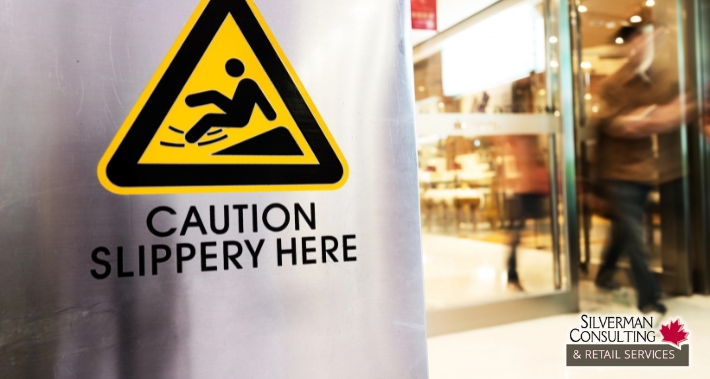
4. Keep Your Floor Clear Of Slip And Fall Hazards
Slip and fall incidents are one of the most common types of workplace accidents.
These accidents can cause injuries ranging from mild to severe.
So, it’s important that you take proper precautions to prevent slips and fall injuries.
For instance, keeping your aisles clear and clutter free can significantly help reduce these types of accidents.
Proper lighting and clear wet floor signs can also help both customers and employees protect themselves.
Finally, you might consider scanning your store for any trip hazards, including unsecured cords or uneven surfaces.
5. Make Sure Your Shelves Are Strong And Stable
Many store owners use industrial sized shelving units to help display their products and store any overstock.
And as helpful as these structures are, they also pose the potential for serious accidents and injuries.
Fortunately, there are plenty of ways you can help increase the safety of your shelves.
Examples include securely anchoring your shelves to the floor and inspecting them regularly for any signs of damage.
It’s also helpful to instruct your employees to stock the heaviest items on the lower shelves.
This helps maintain proper shelving balance as well as reducing the risk of heavy boxes falling on your customers.
6. Keep A Well-Stocked First Aid Kit Accessible
A well-stocked first aid kit can help address any minor injuries that might occur.
It can also provide temporary aid for more serious injuries that’ll help until emergency crews arrive.
Make sure that each of your employees know the locations of the first aid kits, and how to use the items inside.
Additionally, it’s important that you restock the first aid items regularly and check to ensure that they’re not past their expiration dates.
A well-stocked first aid kit typically includes:
- Adhesive bandages
- Gauze or compress dressings
- Adhesive tape
- Antispastic wipes
- Antibiotic creams
- Emergency blankets
- Cold compress
- Nonlatex gloves
- Painkillers
- Tweezers
- Oral thermometer
- Emergency first aid instructions
7. Make Sure Your Store Is Child Proof
It’s important that your workplace is dedicated to helping protect the health and safety of the most vulnerable members of your community, including children.
Having a family friendly environment that prioritizes child safety is an essential component of any workplace safety plan.
This includes having a clear set of directions to help locate lost children.
For instance, you can create a designated meeting point and train your staff on the steps they should take to help assist any lost children.
It’s also important to keep aisles clear and securely store any heavy objects to help ensure the safety of your littlest customers.
8. Make Your Store Easy To Navigate
Stores that are easy to navigate help prevent many different types of accidents and injuries.
This includes having clear signage to direct your customers towards the cash, exits, and to your different types of merchandise.
You might also consider adding floor markings to help direct customers during peak hours or special sale events.
9. Consider Security Cameras
Security cameras provide your store with many great health and safety benefits.
For starters, they help ensure that your store is following proper safety protocols.
These days, certain types of security cameras can even automatically identify any safety concerns before they cause an accident.
Security cameras are also important for loss prevention.
Even dummy cameras and signs that tell would-be thieves that they’re on camera can help prevent theft.
10. Keep Your Cash Secure
Keeping your cash secure can also help prevent theft and keep your customers and employees safe.
For instance, having drop boxes and timed safes can help reduce the likelihood of theft.
You can also ensure that each of your employees are familiar with safe cash handling strategies.
Book Your Consultation With Silverman Consulting And Retail Services Today
Retail safety isn’t just about meeting regulations — it’s about protecting people, preventing costly incidents, and creating an environment where employees and customers feel secure.
Even small hazards can turn into major problems if they’re overlooked, especially during busy periods, sales events, or store transitions.
By taking proactive steps like improving emergency planning, reducing slip-and-fall risks, and strengthening security measures, you can significantly lower your exposure to injuries and liability.
At Silverman Consulting and Retail Services, we understand how safety challenges evolve during retail store sales events, and we help retailers manage those risks with confidence.
Whether you’re maintaining day-to-day operations or preparing for a major transition, the right safety strategy makes all the difference.
Book your consultation with Silverman Consulting and Retail Services today and let us help you protect your staff, your customers, and your business.
Silverman Consulting & Retail Services229 Yonge St suite 400,
Toronto, ON M5B 1N9, Canada
1 (888) 955-1069