If you’re like so many people, you might dream of starting your own retail business.
Maybe it’s the allure of being your own boss, or the good experience you had with your favourite local retail store in the past.
It’s no secret that retail has been through the wringer over the past decade or so.
As store closing and liquidation services consultants, we’ve seen it first hand.
However, it’s still possible to start and run your own successful retail store.
It’s definitely not a walk in the park, but not impossible either.
Retail stores are innovating to survive, and new ones are opening – yours can too.
Let’s take a look at how.
Choosing A Good Niche
If you already made the decision to open your own business, you have probably also thought about what kind of productsyou want to offer.
But how specific can you get about your clientele and the type of products you’d like to offer them?
For example, consider some of the retail options listed below.
Each of these is an example of retail businesses that are still able to thrive in today’s market.
- Sporting goods shops
- Specialty grocery stores
- Gift shops
- Hardware stores
- Clothing boutiques
- Furnishing &home decor stores
- Footwear stores
- Bike shops
- Bookstores
How can you get more specific than just offering these goods generally to the public?
How can you make your store more appealing to a more specific type of person?
And is there enough of a potential market there to make your business viable?
Get To Know Your Competitors
If you’ve made it to this step, after deciding on a niche for your business and making sure it’s profitable, then you’re ready to start researching your competition.
In order to determine how your competitors sell their products, pay close attention to the following:
- The specific products they offer
- The relevant products they don’t offer
- The marketing strategy they use
- Their merchandising and remerchandising strategy
- The various types of sales events they run
- Their location
Create A Business Plan
After all your brainstorming and daydreaming, it’s time to put it on paper.
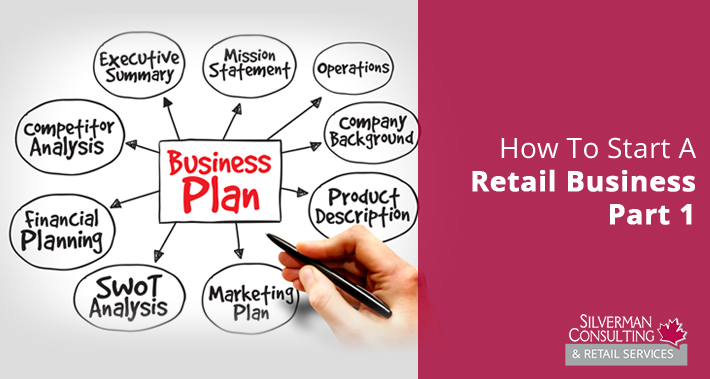
This is called a business plan and every business should have one, in order for you and others to understand what your business is all about.
For the vast majority of people, getting access to the capital you’ll need to start your business involves dealing with either banks or private lenders, and that means you’ll need a business plan.
Even if you have extensive financial resources, you need a plan in place to set your goals, stay on track, and measure your success.
Some of the things to include in your business plan include:
- An overview of your business
- Your business goals
- Your unique selling proposition
- How you plan to achieve these goals
- Past experience in the niche
- An overview of your competitors
- Your marketing strategy
- How much capital you’ll need to get started
- Your profit and revenue model
- Estimated sales volume
- Estimated cash flow projections
- Estimated monthly expenses
- Who your suppliers will be
- The management structure of your business
- The employees you’ll need and what you plan to pay them
- Concrete data on how in demand your products are and your target market
- Information on your competitors
- And more
Going through the experience of writing a business plan can be surprising, since it can mean revealing just how expensive running your store might be.
However, it’s important to understand what you’re getting into with both eyes open.

Register Your Business
This is the formal part – making sure your business is a legal entity.
The process of doing so isn’t terribly onerous – you’ll just need to spend some time online or at your local government office filling out some forms.
However, getting everything you’ll need in place in order to do so can take months, so make sure to get everything in order before you open.
You’ll need to know the following about your business in order to properly register it:
The Name Of Your Business
That might go without saying.
But it’s hard to register a business when you don’t know what it’s called.
Your business name should remind people of what you sell and who you’re speaking to.
Also, it’s important to make sure it hasn’t been taken already.
Search for potential names in the Canadian Trademarks Database to make sure.
If you’re planning to open a store outside of Canada, look into the local equivalent there.
The Legal Structure Of Your Business
Should you register your business as a sole proprietorship?
A limited liability company?
A corporation?
Each has its advantages and disadvantages, and it’s important to have a full understanding of what those are before you make your decision.
Be sure you speak to a business lawyer , accountant, or other professional in the field before you make such a decision.
Any Licenses And Permits You Need
This isn’t always necessary for retail shops.
However, if you plan to sell any food, controlled substances, or offer repair services that require credentials, it’s important to have these in place.
Business Insurance
There are a number of different types of insurance you may want to consider.
These include:
- General liability insurance
- Commercial property insurance
- Commercial auto insurance
- Crime insurance
- Business interruption insurance
- Inventory and stock insurance
- And more
It’s a good idea to speak to a commercial insurance broker in this regard.
Choose A Good Location
If you want to have a brick and mortar location for your business, you’ll have to choose where the best spot is.
Finding the right location will depend on:
- Your target market
- The kind of products you are selling
- Demographics
- Location costs
- Foot traffic
- Special accommodations for your employees and your inventory
- Your budget
Remember that it’s always ideal to find a high traffic area, but it’s equally important to keep in mind your target market.
However, finding the perfect location will also depend on your budget.
The best locations are usually more expensive, and you also have to consider other expenses such as renovations for example.
Aside from a physical location, it’s also important to consider a strong online presence, so you get more visibility and sales.
Contact Silverman Consulting And Retail Services Today
After reading this article, you might be about to make the big decision of opening your own retail business.
Consider looking at an established retailer that may be looking to retire.
Many baby boomers started retail businesses over the past 40+ years and most are now at or near retirement age.
An established business comes with an established customer base and may offer you a better path than starting from scratch.
However, you might still have some questions, especially when it comes to the future.
If you’re wondering about what will happen if you need to relocate your business, sell it, or even retire from your retail business, make sure to contact Silverman Consulting & Retail Services.
We can help you with any questions you may have when it comes to big transitions and changes in your retail business.
Contact Silverman Consulting & Retail Services today
Silverman Consulting & Retail Services229 Yonge St suite 400,
Toronto, ON M5B 1N9, Canada
1 (888) 955-1069