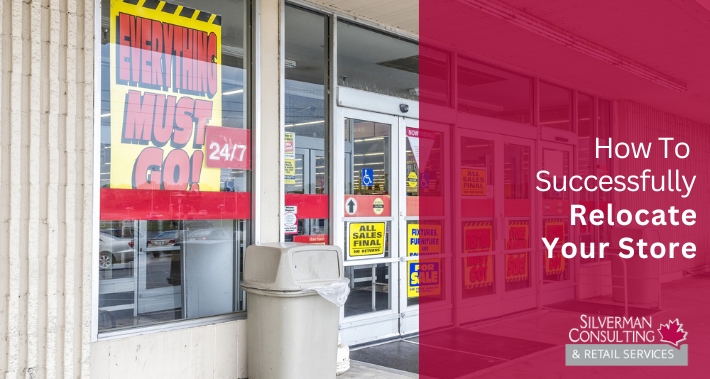
Relocating your retail store isn’t an easy task.
There are many different factors that go into closing down your existing retail store and moving into a new location.
You have to consider the logistics of the move and plan ahead.
This includes choosing a new location, planning a moving date, speaking with your employees, and most importantly run a store wide sale.
You also have to let your existing customers and vendors know about your upcoming move and maintain your business until then.
While this can all seem overwhelming, you don’t have to do it alone.
We can help.
At Silverman Consulting and Retail Services, a retail store sales consultant can help you manage your store location closing sale and liquidate a significant amount of inventory.
This can free up capital for you to invest into your new location and help you stay organized and focused on making a smooth transition.
In this article, we’re looking at what to consider in order to successfully relocate your retail store.
Above All Else, Plan Ahead
That might go without saying, but it’s important to keep in mind.
The further out you begin planning your retail relocation, the smoother it will go.
Let’s take a closer look at some of the things to plan ahead to help make this process as efficient and lucrative as possible.
1. Plan Your Moving Date
This is the big one.
Everything else in your move revolves around your moving date.
Ideally, it’s a good idea to try and move during a slow season.
This will give you time to get settled in and prepare your new store.
Of course, this will rely on many different factors, including:
- When your current lease is up
- When your new space will be ready
- When moving companies are available
2. Plan With Your Employees
When you’re making the decision to relocate your retail store, it’s important to plan the move with your employees.
This isn’t just a big decision for you, but for them as well.
There’s a balancing act, however.
From a courtesy perspective, it’s a good idea to let your employees know you’re closing your retail store location with as much notice as you can.
However, not all of them may relocate with you.
Some may not be able to, or won’t want to add a potentially longer commute to their day.
As a result, some employees may leave.
The ones that stay may also feel frustrated at the move, so make sure you speak to them to find out how to keep them happy during the process.
Once you begin your location closing sale, however, the cat will be out of the bag.
Monetary incentives may help retain some of your employees until the end of your store wide sale event.
Also, as a business owner, be prepared to put in more hours and take up additional roles during this transition period.
3. Plan Your Next Location
There are many things to consider when choosing a good location to move your retail store to.
Let’s quickly go over some of them.
First of all, think about what type of goods you sell.
Depending on what your store sells it’s important to plan your location accordingly to make sure customers come to your store.
For example, do you own an independent drug store?
If so, it may be a good idea to set up near a doctor’s office.
Do you own a pet store?
Consider a neighbourhood with lots of dogs and dog parks.
Also think about the neighbourhood that you want to move your store into.
Are the demographics of that area in line with the kinds of products you’re selling and the prices you’re selling them at?
Another thing to consider is whether or not there are complementary stores or competitors in the area that your new store will be in.
For example, if you sell high end merchandise, it may be a good idea to open your store where customers are going for a similar type of experience.
But also make sure that your new location isn’t oversaturated by businesses too similar to your own.
Lastly, keep your budget in mind.
Storefronts have a lot of hidden expenses you have to consider.
Try to get data on the area that you’ll open your business and see how much other similar businesses are spending.
This will give you an idea of your expected costs and allow you to manage your budget.
There are many more considerations when it comes to planning your next location.
For more insights, contact Silverman Consulting and Retail Services today.
4. Plan Your Store Relocation Sale
If you’re like most retail stores, you have a collection of old and aged inventory you’ve been sitting on.
It might feel like it’s been there for years.
The idea of moving it all might feel overwhelming.
But a managed store relocation sales event from Silverman Consulting And Retail Services can help you move it in a much easier way – by selling it.
There are numerous benefits to having a location closing sale.
First of all, the less inventory you have, the less it will cost you to pay a moving company to move what you have.
Moving items also comes with risks.
No matter how careful you are, items may be lost or damaged.
So, selling them ahead of time can help minimize these risks.
Additionally, selling inventory that has been sitting for a long time frees up capital that you can invest in your new location.
This is also an opportunity to consider clearing out lines that are under preforming or not as relevant in your new market.
This can help you make room for new lines and products and free up more cash.
Also keep in mind to order less merchandise as you approach your moving date so that you can focus on getting rid of the stock you already have.

Next, Communicate
When deciding to relocate your retail store, it’s important to communicate your move to those involved and to the community.
This can help you retain your business’ success and reputation.
This means finding ways to effectively communicate with your customers, employees, and vendors.
1. Communicate With Your Customers
Before making a general public announcement about closing down your store’s location, it’s a good idea to tell your most loyal customers one on one.
You can do this by phone call, email, social media, or in person.
This can show them that you value and appreciate them, and help them remain loyal customers at your store’s new location.
Afterwards, you can announce your new store’s grand opening to all your customers and your new community.
Be sure to post your relocation plans with in store signs, flyers, and emails, as well as on your website and social media.
You may also consider getting some handouts printed for customers with your new location as they check out.
If possible, add it to the bottom of your POS sales receipts as well.
2. Communicate With Your Employees
As we’ve already mentioned, it’s important to plan your store’s relocation with your employees in mind.
This can be a sensitive topic, especially with employees that have been at your store for a long time.
Some of them may react negatively, so keep in mind to remain calm and provide them with as much information as you can.
Tell them about your plans, but not too early.
Some employees may want to quit before you close down your store, which can cause issues with running your sale event.
It’s a good idea to organize a meeting and tell everyone all at once.
This can help avoid rumours and allow you to answer your employees’ questions directly.
Consider how you will speak to your employees and be compassionate about how this news may affect them.
Remember, not all of them may be able to or want to relocate to your new retail store location.
Consider incentives to keep them working through to your current retail store’s closing date.
Lastly, recognize and appreciate the work your employees have done for your business.
This can help maintain a positive environment while going through this transition, as well as help you maintain good relationships with your employees.
3. Communicate With Your Vendors
It’s also important to maintain clear communication with your vendors leading up to your store’s relocation.
For product suppliers, discuss the logistics of how they’ll be able to fulfill orders and deliveries to your new location.
Their delivery times, cost, and other factors may be impacted by your move.
By communicating and planning ahead of time, you can help keep your operations running smoothly and give your vendors the opportunity to plan accordingly as well.
Also remember to communicate with any service providers, utility companies, and security companies you use in advance.
This way you can get everything set up in your new store so that you can open as soon as possible once the move is complete.
Communicate with any delivery service you may use to ensure they are able to meet your needs at your new location.
Lastly, communicate your move with your existing and new landlords.
Move, Unpack, And Open Your New Location
In order to save time and stay organized, it’s a good idea to hire a professional mover to take care of everything.
This includes packing and unpacking everything you’re bringing from your old retail store to your new one.
This can make the process go by quickly and efficiently, giving you more time to run your store closing sale and focus on other aspects of the move.
After all, your staff may not be too keen on lifting heavy boxes all day.
Once you’ve unpacked and set up your new retail store, there are a few things you can do to help launch your opening.
Once you’ve moved in and are ready to open, consider having an open house to showcase your merchandise.
Also, invite your previous customers, as well as new potential customers, to come see your new store.
Another strategy you might consider is offering discounts during your store opening.
This can help incentivize people to visit your new store and make purchases.
Contact Silverman Consulting And Retail Services Today
Are you ready to close down your existing retail store and move into a new location?
Or perhaps you’re considering closing down your store to venture off on a new path.
Whatever the case may be, Silverman Consulting and Retail Services can help.
We’ll work with you to help manage your store closing sale and liquidate your assets so that you can move on to the next phase of your life.
Contact Silverman Consulting And Retail Services today, to get started.
Silverman Consulting & Retail Services229 Yonge St suite 400,
Toronto, ON M5B 1N9, Canada
1 (888) 955-1069