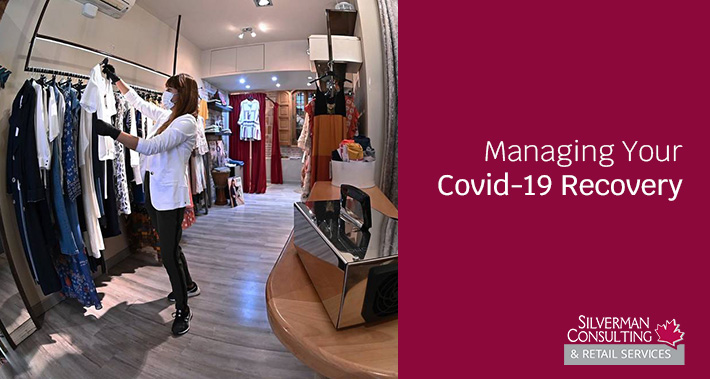
There is no question about it, retail stores have been hard-hit by the COVID-19 pandemic.
Many were forced to close for a number of months, and those which didn’t likely still saw a decrease in sales due to the public caution around going into public spaces, and limits on the number of people allowed in a store at one time.
We’re Silverman Consulting & Retail Services, a retail store closing consultant, and we’re here to help you through this.
Whether it’s time to close, move, or if you’re in a position to make big changes to recover from pandemic-related challenges, we’re here to help.
Keep reading to learn more about what your options are, and how to move forward.
It Might Be Time To Close, But Not Necessarily
As businesses across Canada start to re-open as COVID-19 lockdown restrictions begin to ease-up, it’s estimated one in seven businesses are at risk of closing permanently.
However many have been able to pivot and find new ways to reach customers during this pandemic.
Consider what services you can offer your community and alternative ways to deliver those services so people continue to see the value you bring.
Although the economy may appear to bestarting to recover, there is still a long way to go, and having a plan can help you to avoid having to close completely.
If it is the right time to close, let us help you look at the numbers, stop burning through cash, and create a successful exit plan.
Steps On The Road To Recovery
As things start to open back up, you might be starting to see a glimmer of hope as far as the future of your business is concerned.
Maybe it’s seeing your regular customers starting to come back, or sales going up as people get back to their jobs and have more income to spend.
However, in order to ensure long-term success, you will need to plan and manage reopening carefully.
Let’s take a look at some of the things you will need to consider as you prepare to reopen.
1. Consider Where You’re Currently At
Before you can begin to manage your recovery, you need to reflect on where you currently stand as a business.
What have you done to get you to this point, and what would you change moving forward?
Are there any actions you’ve taken which you are particularly proud of, and what mistakes would you prefer not to repeat?
Also consider the impact the pandemic has had on your employees, as well as your competitors.
Overall, getting a good sense of where you stand will help to guide your future decisions.
2. Consider Your Products/Services
A big factor for businesses which have managed to survive this far into the pandemic, has been being able to re-align services to match what people need.
For example, some restaurants with large quantities of food on hand, and perhaps resources for ordering large amounts of the raw ingredients pivoted to offering grocery services.
This allowed them to use the structure they already had in place for takeout and delivery orders to service clients who were hesitant to go to grocery stores.
Surprisingly, we have seen some luxury goods increase in sales.
Customers with secure incomes still have cash, and since they’re not going on vacation or going out, they have a lot of disposable income available.
Non essential goods have seen increases in the low end and the high end of the market and there appears to be decreases in the middle of the market. How might this affect your business in the coming year?
Understand items that may have previously been in high demand might not be seen as being as important anymore.
Ask yourself what products and services your clients are looking for now.
This can go a long way to helping survive, and maybe even thrive in the coming months.
3. Consider Your Location
With all the changes to the new way to do business, how is your space working for you?
Some businesses are considering downsizing their retail footprint to save money.
However, with vacancies at an all-time high and rent creeping downward, you might even consider expanding.
Regardless of your decision, though, it’s important to have a plan in place.
Here at Silverman Consulting & Retail Services, we’ve run hundreds of successful retail store moving sales across Canada – whether you’re downsizing or upsizing, we can help.
4. Do More Than The Health & Safety Bare Minimum
By now everyone is familiar with health and safety guidelines which make up the “new normal” in society.
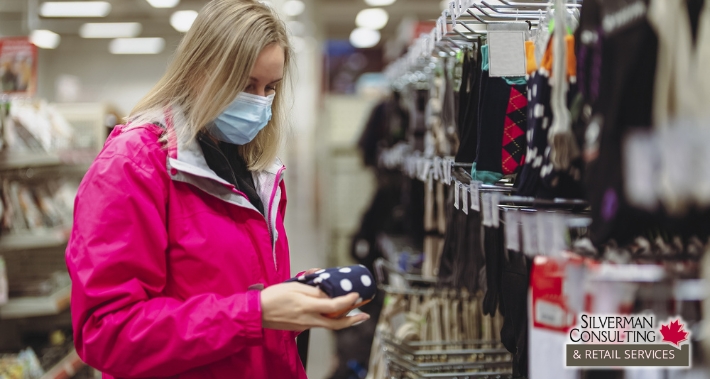
Wearing masks, enforcing social distancing, and hand sanitizer stations are becoming common.
However, aside from these measures which are visible to the public, what you do behind the scenes to keep your staff safe will have an impact on how you are judged.
After all, we all know workplaces with poor worker conditions are often publicly called out.
Some things to consider include:
- Mandating physical-distancing measures in employee-only spaces; this is especially important if you only have a small break or lunch room
- Keeping areas commonly used by employees clean and sanitary
- Communication with employees regarding changes in procedures
- Measures to be taken if there are confirmed or suspected cased of COVID-19 amongst employees
The Business Development Bank of Canada (BDC) has created a helpful checklist of things to consider when planning a safe return to work.
Additionally, you will need to keep abreast of local and provincial guidelines, which can change as case counts rise and fall.
5. Have A Contingency Plan
If you haven’t done so already, there is no time like the present to conduct a risk assessment, and identify the factors which may threaten your service delivery going forward.
Start by evaluating the external resources you need to run your business, and the factors which may affect them.
Some questions to consider include:
- Who are your suppliers? Are they at risk of closing or being unable to supply what you need?
- Do you have a contingency plan if your employees become sick, or are required to self-isolate?
- Are employees cross-trained to be able to step into new roles if needed?
- Do you rely on any unique or custom equipment? What will happen if it stops working?
Once you have identified these risks, you can determine mitigation measures to stop them from affecting your ability to provide services, such as:
- Contacting alternate suppliers, or creating agreements with similar businesses to share resources
- Cross-training employees on important tasks
- Having a ready list of phone numbers to call in the event of an emergency, so you aren’t scrambling at the last minute.
6. Talk To Your Customers
As you start to prepare for the future, it’s important to maintain contact with your customers to find out what they need and want going forward, and how this has changed from pre-pandemic times.
Informal methods may include leveraging your social media presence to conduct polls or surveys, or reaching out to existing customers via phone or email to do a more detailed needs analysis.
Try to determine how your brand looks to others as well.
Do you have a favourable reputation, or do you need to work to strengthen some aspects of this?
If it’s the latter, this might be a great opportunity for you to repair your reputation.
Learning what your customers need at this time, and ensuring you are still viewed in a favourable light will influence your plans for moving forward.
Contact Silverman Consulting & Retail Services
You’ve weighed your options for moving forward in your business, and are ready to take the next steps.
If you’ve decided the next steps do involve closing your doors, Silverman Consulting and Retail Service can help.
We are experienced in managing retail store closures and have the experience needed to help guide you through a successful store closing.
Contact Silverman Consulting today.
Silverman Consulting & Retail Services229 Yonge St suite 400,
Toronto, ON M5B 1N9, Canada
1 (888) 955-1069