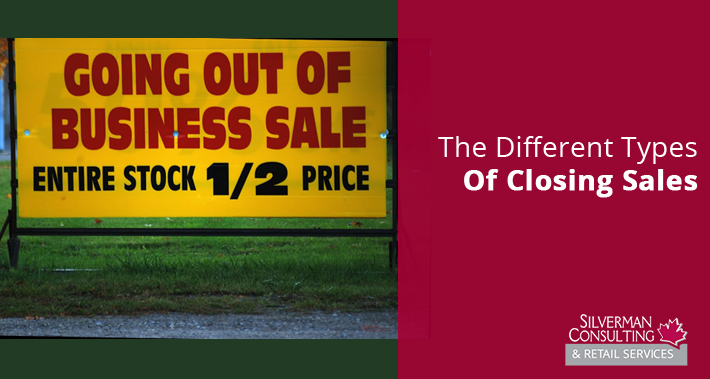
If you are considering a major change and may be thinking of closing, moving, downsizing, or consolidating, how do you find the right path for your future?
How do you deal with the stress and uncertainty?
The stakes are higher when you’re executing a closing sale event, as you only get one chance, and you want to make sure you get it right.
Silverman Consulting & Retail Services is here to help you navigate your out of business sale, whether you are closing your business entirely, changing your location, or changing your business model.
There are different processes to execute to create a successful store closing event, and understanding which ones are best for your unique situation is critical.
So let’s examine the various types of out of business sales and identify the differences between them.
What Is A Going Out Of Business Sale?
A going out of business sale occurs when the retailer decides to close down their current operation.
Whether you have one store or many, the entire business can be shut down for one, or multiple reasons.
The consumer usually views a going out of business sale as a negative thing that has happened to the business, and they will often expect a deeper discount on all inventory.
This type of sale brings with it a sense of urgency, as the idea is that everything must go as quickly as possible.
A going out of business sale is not just any sales event.
You will probably aim to sell literally everything in your store, from fixtures and supplies to break room furniture and warehouse inventory.
You want to maximize revenue by keeping your store well stocked as long as possible during the sale to attract more buyers.
You will deep discount items towards the end of the sale for maximum turnover, as you usually have a limited time.
What Is A Retirement Sale?
As suggested by the name, a retirement sale occurs when the business owner has decided to retire.
The decision has been made to exit the retail business and pursue another opportunity or lifestyle change.
The choice to retire is one motivated by many factors but is often to relax and enjoy life more comfortably.
A retirement sale, then, is often planned to coincide with the end of a lease, but if possible should be planned to happen at your usual highest volume time of year.
Many tactics can be employed to encourage traffic and urgency.
Although there can be many reasons for retirement, a retirement sale has a positive connotation, and with it come well wishes to the business owner.
Therefore, the consumer sees this as a final opportunity to shop with a favourite and trusted retailer, plus realize significant savings.
What Is A Moving Sale?
For whatever reason, you may make the decision to move your store.
A moving sale happens when you decide to close or downsize or consolidate locations.
In this type of sale, you want to reduce your inventory and certainly dispose of old or discontinued inventory.
Whether the reasons for the move are positive or negative, there is still a lot to consider with a moving sale.
One of the first things is how much to sell and how much you wish to move.
You may need to sell off old stock so that you can reinvest it in preparing the new location.
Or you may be transitioning to an online business where you can sell your inventory, but you need to reduce stock.
The consumer will expect reasonable discounts but you will have to employ tactics to manage expectations and create some urgency and motivation to buy now.
Regardless, it’s a good idea to speak with a retail relocation consultant to get a better understanding of what to do next.

What Is A Store Closing Sale?
Much like a moving sale, a store closing sale involves the closing of one or more of your locations, but can even happen when your business will continue to exist.
This type of sale event requires management to create incentive to buy today and some urgency.
This is an excellent opportunity to liquidate inventory and turn dead stock into cash.
You can also take advantage of selling store fixtures, supplies and more.
If you are consolidating multiple stores, you need to reduce and likely change your inventory mix.
However, it’s important to keep the store where the sale is taking place looking fresh and to keep enough product on hand to make it worth the customer visiting your sale.
A closing sale event has a beginning and an end, and you only get one shot at a store closing sale, so you may want to consider bringing in a professional to get it right.
Book An Appointment With Silverman Consulting & Retail Services
No matter what type of closing sale event you are planning, Silverman Consulting & Retail Services can help.
Our team will work with you to plan, promote, and execute your store closing sale.
You have enough to worry about when facing the closing of your business.
Leave the rest of it to us.
Contact Silverman Consulting & Retail Services today.
Silverman Consulting & Retail Services229 Yonge St suite 400,
Toronto, ON M5B 1N9, Canada
1 (888) 955-1069