
As a business owner, you likely spend a fair amount of time strategizing how to make your business as successful as possible.
But how often do you think about strategies that will help you when it’s time to exit your business?
Many people put off thinking about their exit from the business world, especially if their company is currently flourishing.
Nonetheless, a departure from business is something that every business owner will experience sooner or later.
Whether due to retirement, a big move, or financial considerations, this chapter in your life will eventually come to a close.
And when that time comes, a retail liquidation sale management firm can help you make the transition as seamless as possible.
At Silverman Consulting and Retail Services, we’re here to help you develop an efficient business exit strategy that reflects your unique needs and goals.
In this article, we explore what to consider when developing your retail business exit strategy.
What Is A Retail Business Exit Strategy?
Simply put, a business exit strategy is a plan that can help you leave your business as smoothly and efficiently as possible.
Most business exit strategies have multiple components.
To start, it usually outlines a rough timeline for your departure.
Additionally, most business exit strategies include your plans for the business once you leave.
For instance, you might consider selling your store to an employee, passing it down to a child, or even closing your business altogether.
Finally, a good retail business exit strategy looks at the most efficient ways you can make this transition.
At Silverman Consulting and Retail Services, we can help you pinpoint your goals for a retail exit strategy and go over the pros and cons of your various options.
Why Do You Need A Retail Business Exit Strategy?
Every business owner can benefit from a solid retail business exit strategy.
As we stated earlier, everyone will exit their business eventually.
At Silverman Consulting and Retail Services, we commonly help business owners exit their business in order to retire.
Additionally, many business owners come to a point in their careers where they’re looking to make a change.
Perhaps you want to open a different type of business, embark on a new career, or volunteer in your community.
RELATED ARTICLE: How to Switch Careers After Closing Your Retail Store
Regardless of the reason, a retail business exit strategy can help take some of the load off your departure.
Ultimately, a solid retail business exit strategy can help you maximize your profit.
That way, you can start the next phase of your life in the strongest position.
Different Types Of Retail Business Exit Strategies
Your specific type of retail business exit strategy largely depends on your goals for your business going forward.
Let’s take a closer look.
1. Selling Your Business Share To A Partner
Many people go into business with a partner.
Of course, there are plenty of benefits to having a business partner.
For instance, it never hurts to have someone help share some of the financial burden.
A partner can also help you run your business more efficiently.
But there’s a lot to consider when it comes to talking to your partner about closing your retail store.
But you might be the only one who wants out.
In that case, your business partner can help ease your transition out of the business.
Your business partner already knows the business inside and out, so you won’t have to worry about training a new owner.
They’re also already familiar with both your staff and customers.
Of course, selling your business share to your partner also has its drawbacks.
For instance, this option can sometimes result in lower profits.
Nonetheless, this option may be appealing if you’re looking to exit your business with minimal disruption to your staff and customers.
2. Selling Your Business To An Employee
In the business world, there’s always people looking to climb the ladder.
And businesses owners that sell their business to an employee help make this happen.
You’ve been managing your company for a long time, so you know which of your employees have the skillset for business ownership.
Selling your business to an employee also has plenty of benefits.
For instance, your employees know the day to day responsibilities of your business by heart and can thus ensure a smooth transition.
However, like selling your business to a partner, this option can also result in lower profits and a longer sale.
Your employees may also have trouble getting the financing necessary to complete the purchase.
3. Selling Your Business To Someone Else
Of course, there are plenty of options when it comes to selling your business.
If you don’t have a business partner, and selling your business to an employee isn’t an option, you might consider selling your company to a third party.
This option can be great for businesses in high demand.
For instance, more people will want to purchase your company for a higher sale price if they can expect a good return on their investment.
Thus, this option often brings the benefit of a high profit.
But there’s a big caveat with that.
The retail slowdown in Canada has hit just about every angle of the industry.
So the question might not be whether or not you should sell your store, but whether or not you can.
4. Passing Your Business To A Family Member
If you’re the parent of children who’ve always dreamed of taking over the family business, this option might be for you.
Sure, this option is certainly less common these days.
With more and more career options available to the younger populations, there’s less desire for kids to take over their family business.
But there are still plenty of benefits if this option works for you.
Passing your business to a child or family member can help ensure your business stays in its current form and with the same values.
You may also be able to avoid tax consequences under the intergenerational transfer rules.
Since this option typically takes a fair bit of planning, it might be less ideal to those looking to exit as soon as possible or who want a quick sale.
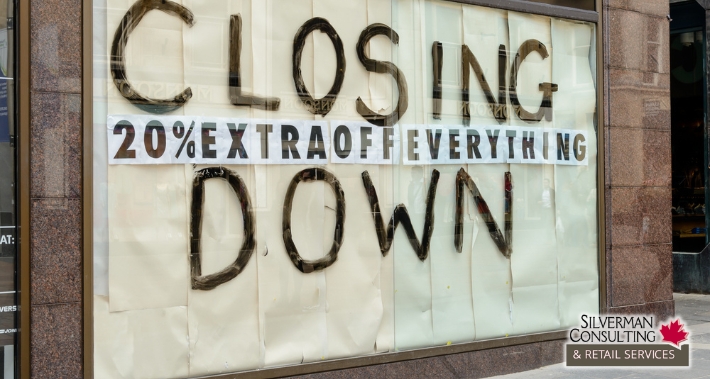
5. Liquidating And Closing Your Business
The last option includes liquidating your inventory and closing your business for good.
Maybe you can’t picture anyone but yourself running the company.
Or perhaps you can’t find anyone interested in taking over.
Regardless of the reason, liquidating and closing your business can provide you with a sense of closure.
It’s worth noting that this option comes with its fair share of tax considerations.
For instance, you might have to think about repaying all your debts and how much tax you’ll have to pay on your profits.
But if you chose this option, we can help you plan a retail store closing sale that will ensure you make as much of a final profit as possible.
Which Option Is Best For You?
Now that you know all about your various options, the next step is deciding which option is best for your unique situation.
At Silverman Consulting and Retail Services, we can help you identify your goals and determine the best course of action for your retail exit strategy.
Book Your Consultation With Silverman Consulting and Retail Services Today
Leaving your business is a major milestone — one that deserves careful planning and professional support.
Whether you’re preparing for retirement, exploring new ventures, or ready to close this chapter altogether, having a strong retail business exit strategy ensures you can do so with confidence and financial success.
At Silverman Consulting and Retail Services, we’ll help you identify the best path forward, manage every detail of your transition, and maximize the value of your business.
Our goal is to make sure you move on from ownership feeling prepared, profitable, and at peace with your decision.
Don’t wait until it’s too late to start planning your exit.
Book your consultation with Silverman Consulting and Retail Services today and let’s create a seamless, profitable transition plan for your retail business.
Silverman Consulting & Retail Services229 Yonge St suite 400,
Toronto, ON M5B 1N9, Canada
1 (888) 955-1069